Reading a coast through its buildings
A harbour town can be read like a document. Its lighthouses mark hazards, its waterfront sheds record how fish were handled, and its house fronts carry small regional signatures. This entry looks at three building types common on the Nova Scotia coast.
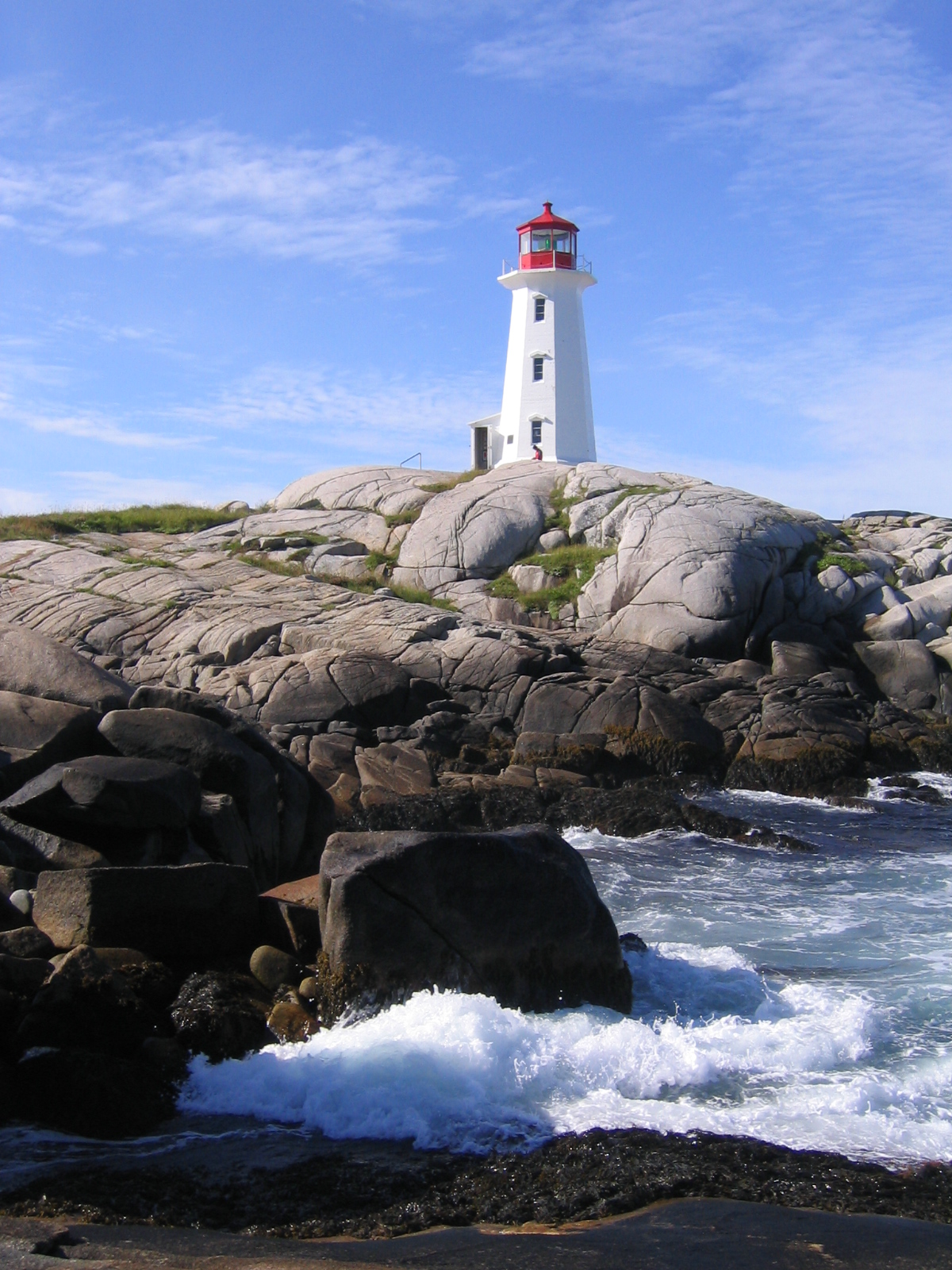
The lighthouse on the rock
The classic Atlantic Canadian lighthouse is a tapering tower, often painted white with a red lantern and trim, set on the most exposed point available. Peggys Cove is the most recognised example: a compact light standing directly on smooth granite that the sea has scoured bare. The form is practical first — height and a clear horizon matter more than ornament — but the result has become a regional emblem.
When reading a lighthouse, note its position relative to the channel, the colour pattern that distinguishes it by day, and whether the keeper's dwelling survives nearby. Each detail once carried navigational meaning.
The working waterfront
Behind the postcard views, harbour architecture is mostly utilitarian. Timber wharves, net sheds, and fishing stages were built to move catch from boat to processing as quickly as possible. Many were raised on posts over the water so that boats could come alongside and waste could be carried off by the tide.
- Stages and flakes. Platforms and racks used historically for landing and drying fish; surviving examples show how salt-fish preparation shaped the shoreline.
- Stores and sheds. Simple gabled timber buildings, often unpainted or tarred, for gear and salt.
- Slipways. Inclined ramps for hauling boats out for repair, still visible in many working harbours.
The house front and the "bump"
Domestic architecture carries the most local detail. In Lunenburg the signature is the overhanging dormer above the front entrance — known locally as the "Lunenburg bump" — a projecting, often five-sided dormer that extends over the door and gives the street facade its character. It is a local elaboration of an imported dormer tradition, adapted by local builders.
Vernacular building is rarely the work of architects. It is the accumulated judgement of local carpenters responding to climate, materials, and the lot in front of them.
How to look
Start at the waterline and work uphill: the lights and stages closest to the water, the stores and workshops just behind, and the houses on the slope above. The sequence usually mirrors how the settlement grew. For background on conservation of these building types, the publicly available material from Parks Canada is a useful starting reference.