Old Town Lunenburg: a colonial grid that still orders the harbour
Lunenburg is often cited as the best-surviving example of a planned British colonial settlement in North America. The reason is simple and visible from any street corner: the town still follows the rectangular grid it was given in 1753.
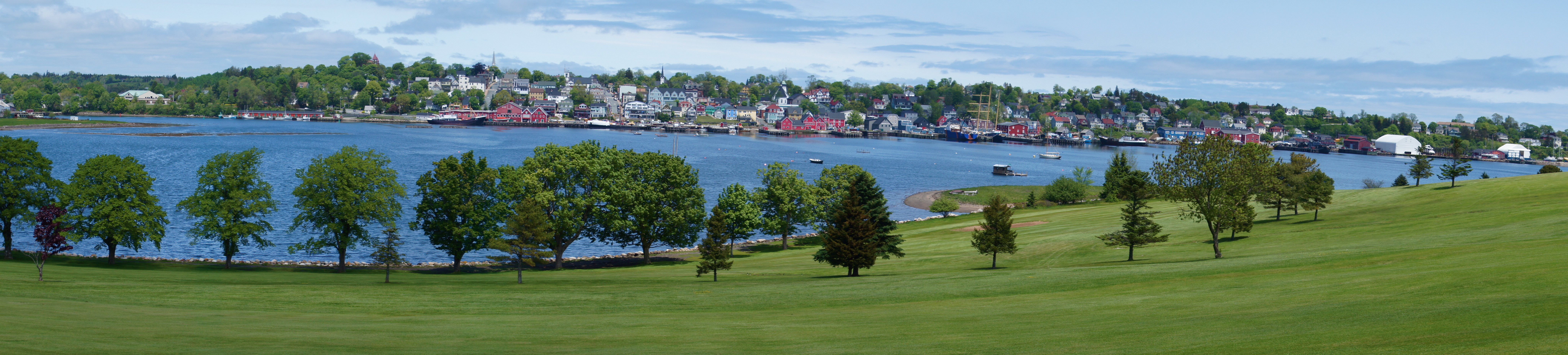
A grid laid on a slope
The settlement was established on a peninsula on Nova Scotia's South Shore and laid out on a regular "model town" grid of rectangular blocks. The plan ran the streets across the slope and down toward the harbour, so that most lots had a view of the water and a route to it. Two and a half centuries later the same blocks, lot widths, and street lines remain readable on the ground.
The original settlers were largely "Foreign Protestants" recruited from German-, Swiss-, and French-speaking parts of Europe. Their building traditions, adapted to local timber and a harsher climate, shaped the timber houses that fill the grid today.
Why the fabric survived
Many colonial towns were rebuilt in brick and stone, widened for traffic, or cleared for new industry. Lunenburg largely was not. The town kept building in wood, kept its lot pattern, and kept its working waterfront, so the historic streetscape was never comprehensively replaced.
In 1995 the Old Town was inscribed on the UNESCO World Heritage List as an outstanding example of a planned British colonial settlement that has retained its original layout and overall appearance.
That recognition is documented in the publicly available UNESCO World Heritage Centre listing, which records both the grid plan and the surviving vernacular architecture as reasons for inscription.
What to look for on the ground
- The grid itself. Walk one block in any direction and the rectangular plan becomes obvious; corners meet at right angles and streets run straight to the harbour edge.
- Colour-washed timber houses. Painted wooden facades, often in strong colours, mark individual lots along the slope.
- The "Lunenburg bump." A distinctive overhanging dormer projecting over the front door, a local elaboration of the Scottish dormer, appears on many older houses.
- The working waterfront. Wharves, sheds, and vessels keep the harbour edge a working space rather than a purely ornamental one.
Practical detail for a visit
The Old Town is compact and walkable; the grid that makes it historically important also makes it easy to navigate on foot. Because it remains a living town rather than an open-air museum, ordinary residential streets sit alongside the most-photographed views, and visitors are asked to treat them as such.
For background before a visit, the town's own heritage information and the provincial tourism material are the most direct public sources; both are linked from our About page.